It was in college that I was forced to make my first truly hard decision. I couldn’t do everything I loved. I had to choose between biology and Jazz.
Both demanded total commitment. Jazz required hours of daily practice, theory, and study. Biology was no different, with long lab hours and an unforgiving schedule. My days simply couldn’t hold both. I didn’t know what the “right” answer was, and I felt the pressure we all feel at that age. You’re supposed to have it figured out. Looking back, I can see how unprepared I was to make that decision.
I chose Jazz. It wasn’t the practical choice, and it certainly wasn’t the popular one. Jazz is far more rigorous than most people realize, but it’s also famously impractical from a financial standpoint. I continued to struggle with the impracticality of that decision for many years afterward.
I wouldn’t change that decision. Every choice and experience led me to who I am now, and I’m proud of that. But that early tension, between passion, practicality, and uncertainty, stayed with me longer than I realized.
Part of the reason I got into finance was the stress of being a struggling Jazz musician, and part of it was the allure. In the mid-to-late 1990s, finance was cool and I had the opportunity to experience it in one of the coolest places.
The NYSE Floor

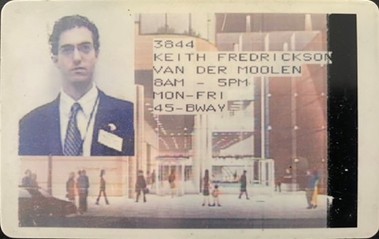
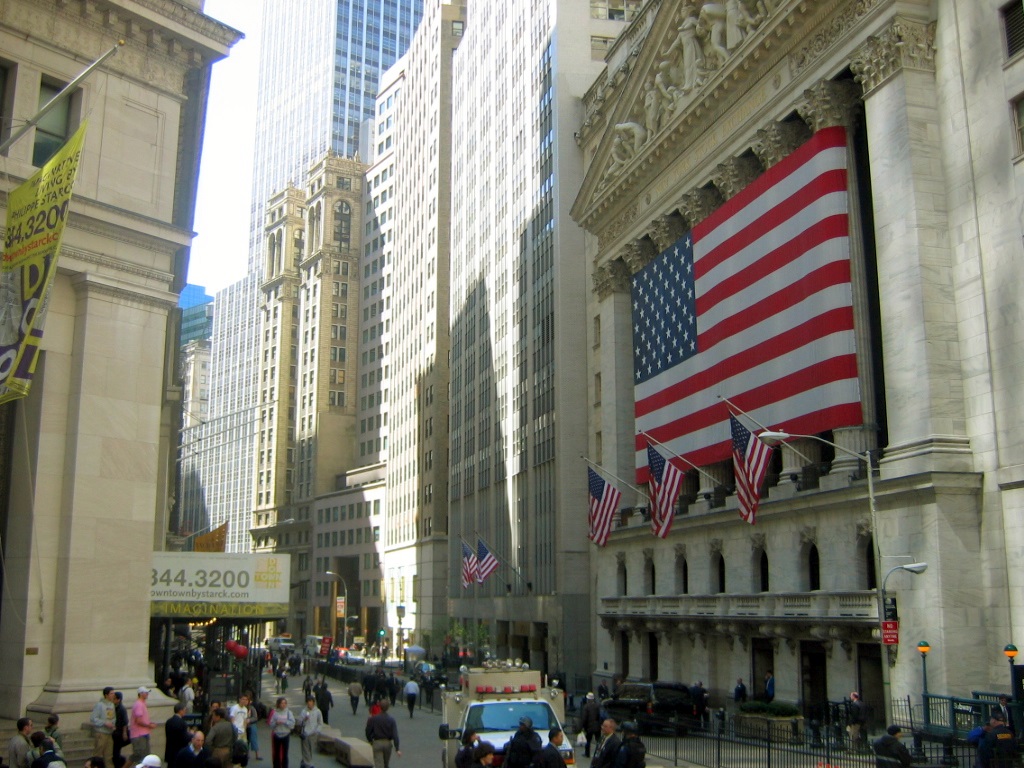
During my college summers, I interned for a few specialist firms on the floor of the New York Stock Exchange. Later, in the mid-2000s, I worked there as a clerk and trader. Back then, the floor had a special energy. It was one of the most unique places anyone could work. The culture, the adrenaline, the cast of characters—it was like nowhere else in the world. My internships in the late ’90s were when I first caught the bug, and my time as an employee later crystallized my passion for finance.
There were still traces of the excesses of old Wall Street. One night during my internship years, one of the firms took all the interns out. I can’t remember which firm it was now, or even exactly where we went. It was the 90s. There were maybe twenty or twenty-five of us. Dinner was on the corporate card. Anything you wanted to eat, anything you wanted to drink. Then a show—I want to say Blue Man Group or Stomp. After that, a bar or club. And at the end of the night, every single intern got their own black car home.
We were interns.
And it wasn’t really about the food or the show. It was how it made you feel. You felt cool. Like a VIP. Like you had stepped into a world that was bigger, shinier, and more important than the one you came from. I know it sounds corny, but that feeling mattered more than I understood at the time.
The floor was exciting, but it was also a place with a real sense of meritocracy. If you were good at what you did, pretty much nothing else mattered. People celebrated each other’s success. If you messed up, they’d never let you forget it—but even that was part of the camaraderie. It was competitive, sometimes ruthless, but also communal, almost like a strange, dysfunctional family.
The culture was different from what people imagine. Not everyone was a stereotypical “finance person.” Sure, there were spreadsheet types, fundamental analysts, and technical traders. But there were also intuitive, old-soul types—people with values rooted in respect, hard work, and teamwork. Some came from top schools with finance degrees. Others didn’t have much formal education at all. And frankly, that said very little about who actually succeeded. Credentials didn’t reliably predict results. Understanding the flow of the market did.
The floor also had a very specific personality, and one expression of that was nicknames. If you worked down there long enough, there was a strong chance you’d get one. I had several, but the one that stuck was Egon, as in Egon Spengler from Ghostbusters. It fit. I was a bit of a nerd compared to most people on the floor, and when I was younger the resemblance was even stronger. Ghostbusters has always been one of my favorite movies, and I’ve always felt an affinity for Harold Ramis. Groundhog Day is also one of my favorite films, and it’s meaningful to me. So the nickname made sense on more than one level.
The people on the floor had a knack for this kind of thing. They had an almost gut-level ability to get to the essence of someone. Egon just stuck. Honestly, I think some people never even learned my real name. Everyone wore a smock down there, and mine literally said “Egon.” I even had a Ghostbusters patch on the sleeve. At a certain point, it stopped being a nickname and just became who I was down there.
I got to work with people who remain close friends to this day—truly unique, soulful, passionate individuals. I was also lucky to witness some of the best trading I’ve ever seen. Real stakes. Meaningful amounts of money. Mentorship from people who were masters of their craft. It was a remarkable place to be, and I don’t take that experience lightly.
 One of my greatest mentors on the floor, and still a close friend today, is an incredibly intelligent, thoughtful, and conscientious person. But some of the most formative lessons I learned didn’t come from the most traditionally “book-smart” people. They came from traders others might have called “street smart,” many of whom were consistently better than those with the most impressive résumés. That surprised me at first. It probably shouldn’t have.
Watching them taught me something essential. Markets aren’t just numbers. Money doesn’t move in a vacuum. Behind every trade is a human being, driven by fear, need, hope, or desire. Markets are emotional systems, whether we admit it or not.
That realization stayed with me. If you think investing can be understood purely through spreadsheets, you’re missing something fundamental. That lesson planted one of the earliest seeds for why I would eventually become a financial advisor.
Eros to Pragma
It’s interesting how language reveals what a culture values. Certain societies create dozens of words to describe something they consider essential. Most of us would agree that love is one of the most meaningful forces in human existence, maybe the most important. I’ve always felt we haven’t done nearly enough work to understand it. The ancient Greeks, apparently, took that work seriously. They had seven different words for love, each capturing a different dimension of the experience. That idea always stayed with me, and two of those words in particular—Eros and Pragma—have resonated with me throughout my life.
In the beginning, my relationship with finance was pure Eros—intense, electric, immediate. The rush of the floor. The sense of being swept into something powerful. But Eros isn’t built to last.
At some point, the excitement stopped answering the deeper questions I was asking.
Over time, that passion matured into something deeper. Pragma. The kind of love that grows as your understanding grows. For me, that’s what makes Pragma so rare. Many things lose their appeal the more closely you examine them. Pragma is different. It becomes more compelling the deeper you’re willing to look.
That’s what finance became for me.
Finance is something we created, which means it evolves as we do. It’s alive. It changes with us. It rewards creativity and imagination, not just analysis. It’s a system where ideas, judgment, and expression matter, and where new ways of thinking can meaningfully change outcomes. That creative element is part of what continues to excite me.
Economics goes further still. It isn’t invented, it’s observed. It’s the study of how human beings exchange, relate, cooperate, and build value together. It’s an intellectual discipline, endlessly challenging, and deeply revealing. It’s really a study of us—and I can’t imagine anything more worthy of lifelong exploration.
And then you add financial advising.
This is where everything meets: the theory, the structure, the years of learning, the exercise of creativity—and the human being in front of me, sitting across the table. It’s where the spreadsheet meets the heart. This is where it becomes purpose. It’s where intellectual rigor and creative problem-solving become service. Where I get to use something I love to genuinely help someone else, one person, family, or business at a time.
That’s where it becomes meaningful.
Choosing It Every Day
When I was younger and first starting in finance, I thought I’d be one of those guys who sits alone in a dark room with a spreadsheet, using nothing but his intellect and determination to conquer the markets—a “master of the universe.”
In some ways, I’m still that guy. But in more important ways, I’m not.
Finance is still exciting. It’s still challenging. There’s pride in getting good at it. But it’s not just about making more money.
It’s about understanding how the world works—and helping others navigate it.
I think back to my younger, pre-finance days, when I was deeply interested in science. Studying science gave me an appreciation for balance. Whether you look at a solar system, a biological ecosystem, a chemical solution, or subatomic forces, there’s an elegant tendency toward stability. I try to bring that same instinct for balance into the human ecosystem we call economics.
This is why I knew Eros was never going to be enough. I needed Pragma to find balance. And it’s also why I know that seeking prosperity for only myself would never be enough. I needed to use my knowledge and skills in a way that served others.
One more science analogy. I believe the human evolutionary advantage is rooted in our ability to cooperate. To work together. I feel that truth in my gut. My purpose in life is to be of service and to help others. It’s not always easy to explain, but I also know this intellectually: the only way I will truly prosper is by supporting the prosperity of others.
Karen Finerman—of CNBC fame—often says that every day she chooses not to sell a stock, she’s effectively choosing to buy it all over again.
The same goes for this profession. I could choose to do something else. But I don’t.
I choose this.
Because it’s a calling. It’s purpose. It’s work that challenges me to be the best I can be every single day—and gives me the opportunity to help others do the same.
There’s so much more to being a financial advisor than picking investments or building financial plans. It’s about being in service to a person, or a family. It’s about guiding someone through one of the most important aspects of their life. It’s about using this tool—this innovation we call finance—for something greater.
That’s why I became a financial advisor, and that’s why I still am one today.